Case Study Manufacturing · Operations

The order screen three ERPs could not make fast enough.

A made-to-order PVC panel factory processed 500 to 1,000 customized orders every day. Two commercial ERPs and one custom system had already failed because operators could not enter a complex order inside the required one-to-two-minute window. Costel designed the workflow around that constraint, then expanded it into the factory's long-running production platform.

Client
Anonymized PVC panel manufacturer
Sector
Made-to-order manufacturing
Engagement
Workflow, platform & integrations
Initial launch
2020
Status
Active production · ongoing
A manufacturing operator reviewing production work beside a PVC panel line
MTO Manufacturing Platform: A keyboard-first platform replaced paper and made 500 to 1,000 custom orders a day workable.
By the numbers
500–1,000Customized orders per day
1–2 minTarget for a complex order
~200 hoursInvested in the main screen
~100Platform users

Close to 10,000 pages a day still did not create live visibility.

Five employees were primarily doing data entry. One of them spent full time multiplying dimensions for invoicing, while printed forms moved between departments.

The same order was re-entered across steps, calculations were repeated by hand, and learning the status of a job meant physically checking the factory. Every inefficiency multiplied across hundreds of different configurations each day.

The previous systems could store the fields. They failed because they asked factory operators to work through too many screens, selections and mouse movements.

Nearly 200 hours went into the one screen operators used all day.

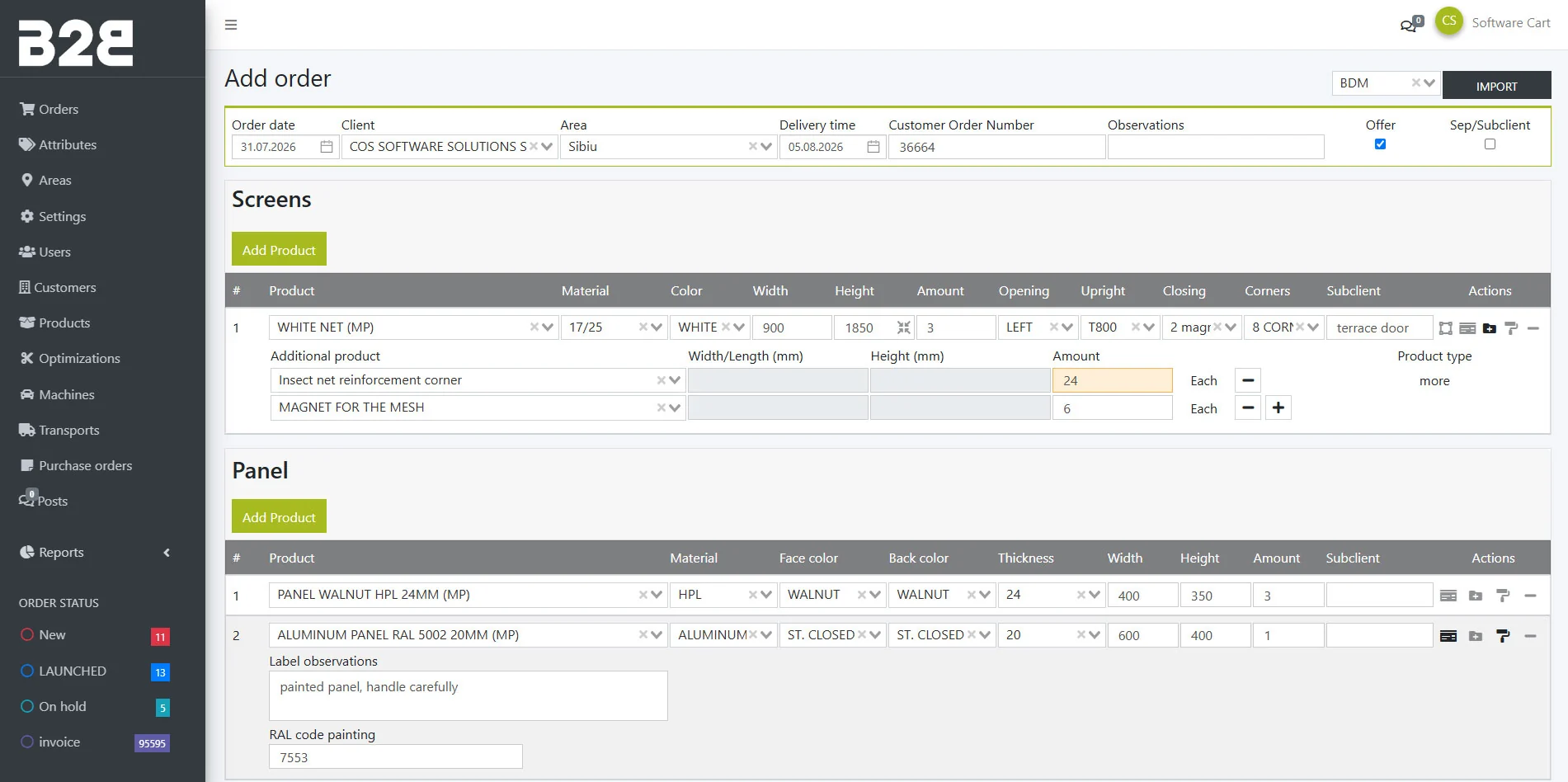
Costel built order entry around the factory's terminology, rules and pace. Cascading selections narrowed every next choice. Dimensions, accessories, materials, validation and calculations happened in the same keyboard-first flow.

Speed without losing control

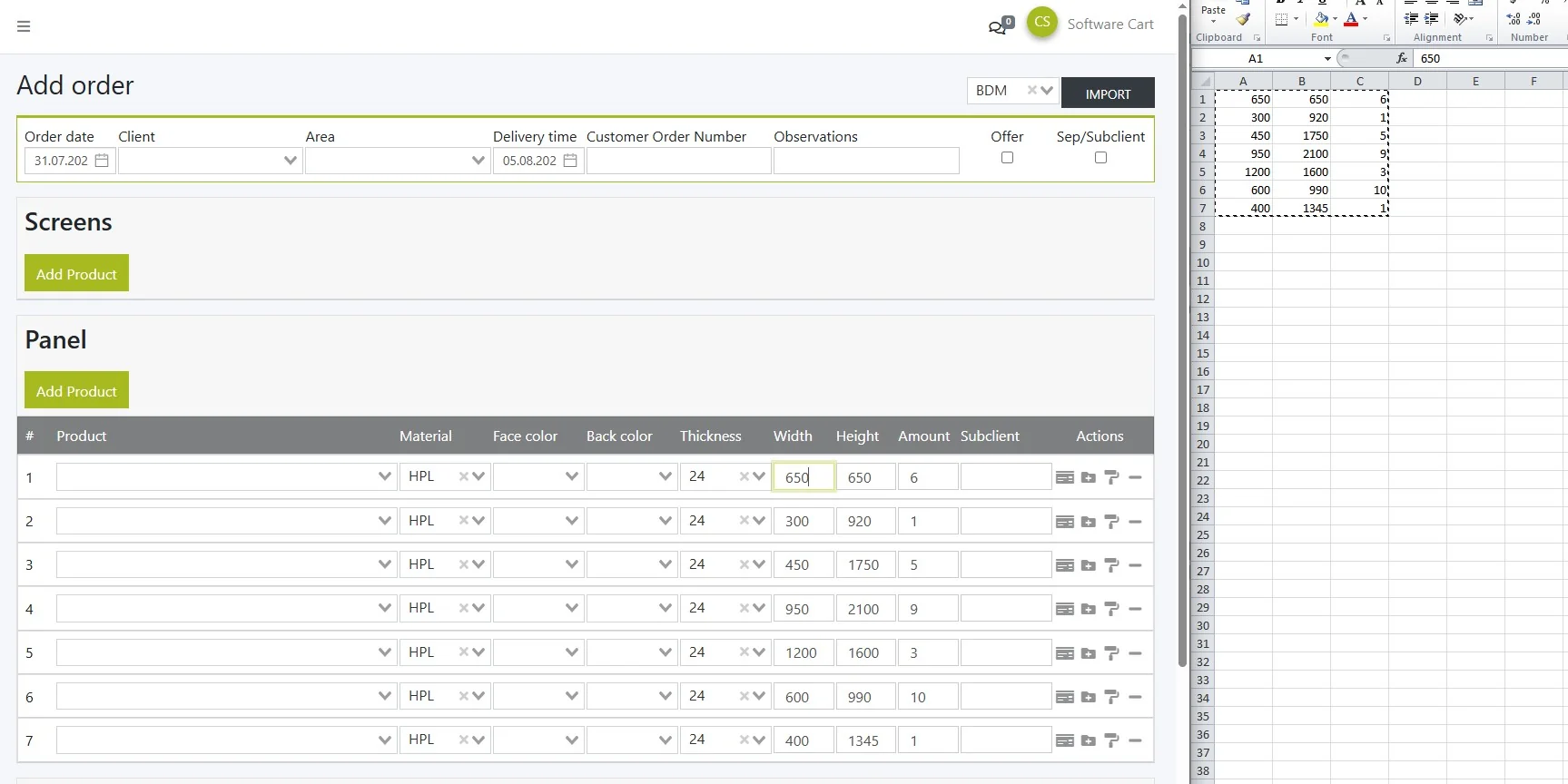
  • Excel paste and customer design-file imports for larger orders
  • Reusable templates for recurring configurations
  • ERP, accounting and invoicing integration from the first phase
  • Automatic production and commercial documents
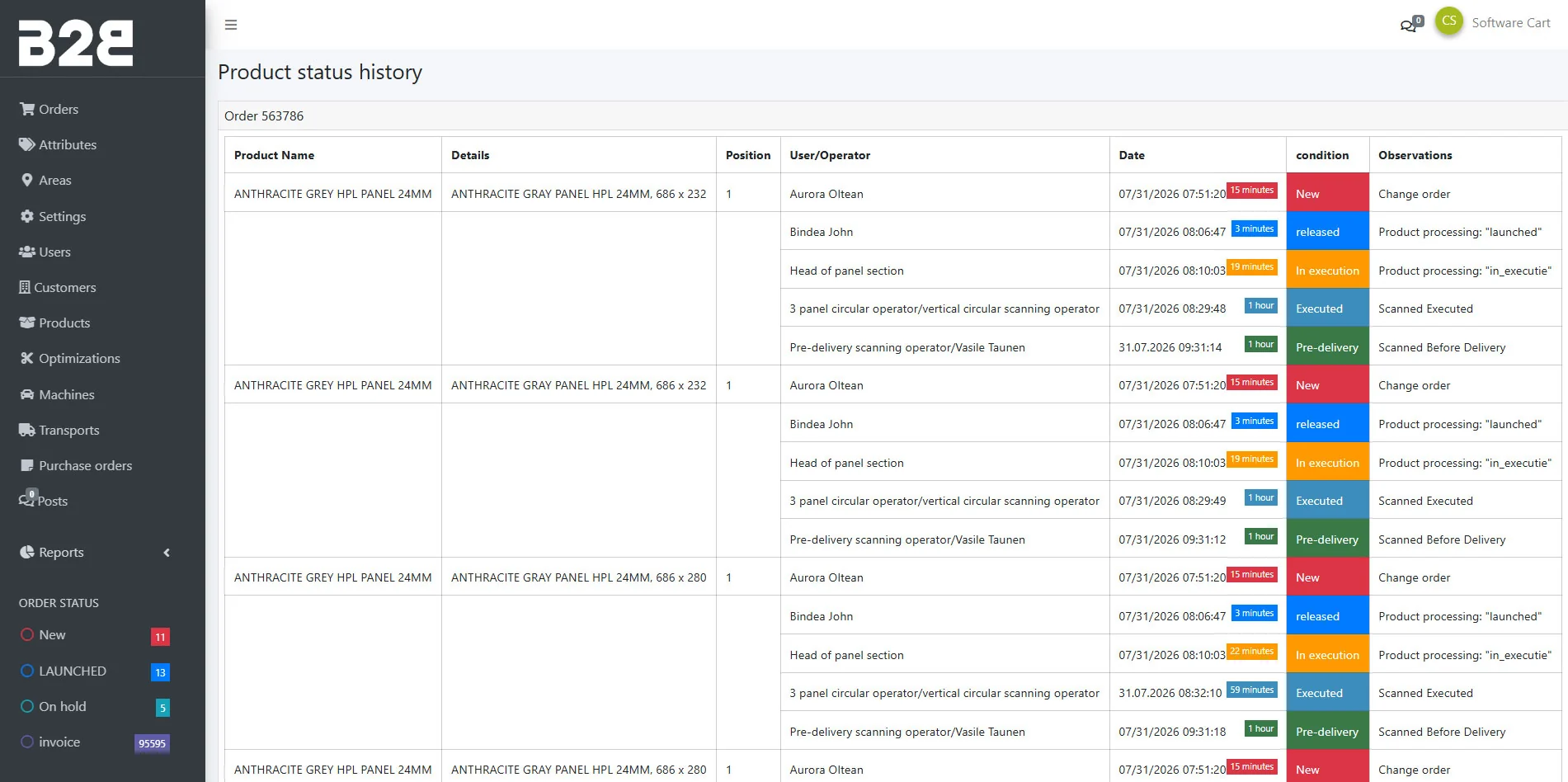
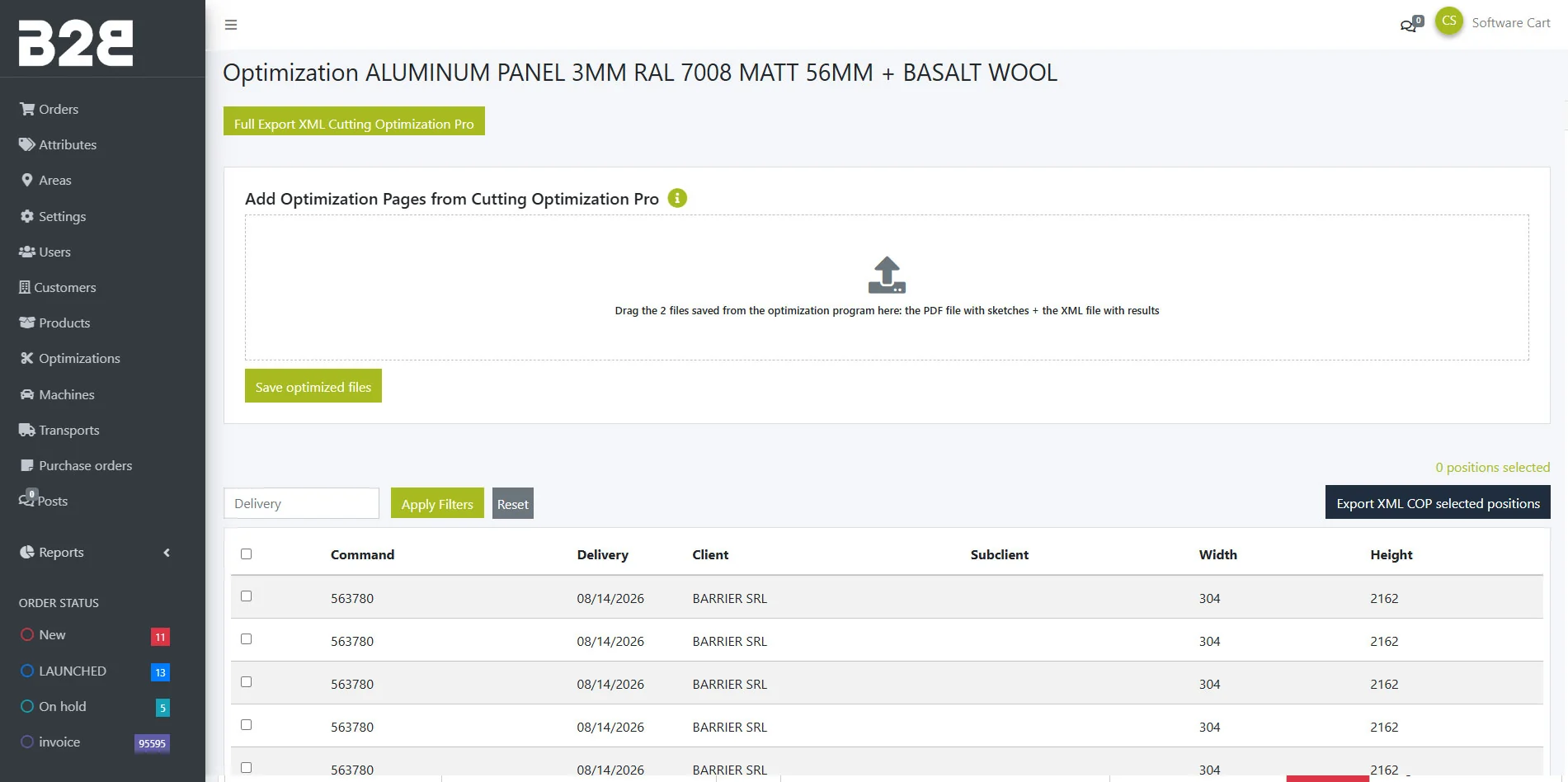
  • Later production tracking, barcode scanning and 2D cutting-optimization integration

The factory did not have to adapt to a generic ERP. The software adapted to the way the factory actually worked.

The live operating surfaces: fast order entry, bulk import, production tracking and cutting optimization.

Engineering note

The decisive requirement was not the number of fields. It was whether an operator could finish a complex order in one to two minutes. That changed the architecture of the interface: keyboard flow, cascading options, imports and validation all had to work together on one screen.

Costel Project partner · the build

Order status moved from a two-hour search to a two-second answer.

Validated information is now entered once and reused across production, documentation, ERP and invoicing.

Automated calculations removed a repeated manual job. Production tracking and barcode scanning reduced paper and made current order status immediately visible to authorized users.

The company reports roughly 330% annual-revenue growth over the five years from the start of digitalization. That growth belongs to the whole business, not the software alone; the platform supplied the operational capacity to process more volume without administration scaling at the same rate.

Laravel Vue.js MySQL ERP integration Barcode workflows 2D cutting
Role
Discovery, workflow, architecture & delivery
Partner
Costel
Model
Long-term product partnership
Status
Active production
Project partner Costel

Digitizing an operating workflow? See fixed-price software builds, embedded engineering, or our work in field services and events.

Next / Your build

Taking on new builds

Have something in mind?

Tell us what you're making. We reply within one business day, and you get a fixed price and a date in writing before any code.