



Case studiesConstruction planning

Ask Trevor: connected construction planning and estimates

Ask Trevor brings property information, uploaded drawings, quantities and costs into one construction workspace. Afaq Jamshad built the platform and its AI; Ego Eimi helped shape the build around the owner, contractor and supplier workflow.

Business
Ask Trevor
Sector
Construction planning
Scope
Planning, quantities and costing
Contributor
Afaq Jamshad
Editorial illustration: an architectural building section with one orange structural beam
AI-generated editorial illustration of the project’s domain.

Early project decisions depended on scattered information.

Before a project begins, an owner needs to know what can be built, what rules apply, what it will cost, which materials are needed and who to involve. Those answers decide the budget, so they need to come first.

The answers come slowly. A council check confirms zoning. An estimator reads the drawings and works up quantities. A spreadsheet holds the costs. Supplier calls fill in prices that change week to week. The owner waits, and the early decisions get made on guesses.

Each step lives in a different tool and a different inbox. Nothing carries the address, the documents and the numbers in one place, so the picture stays scattered right up to the point money gets committed.
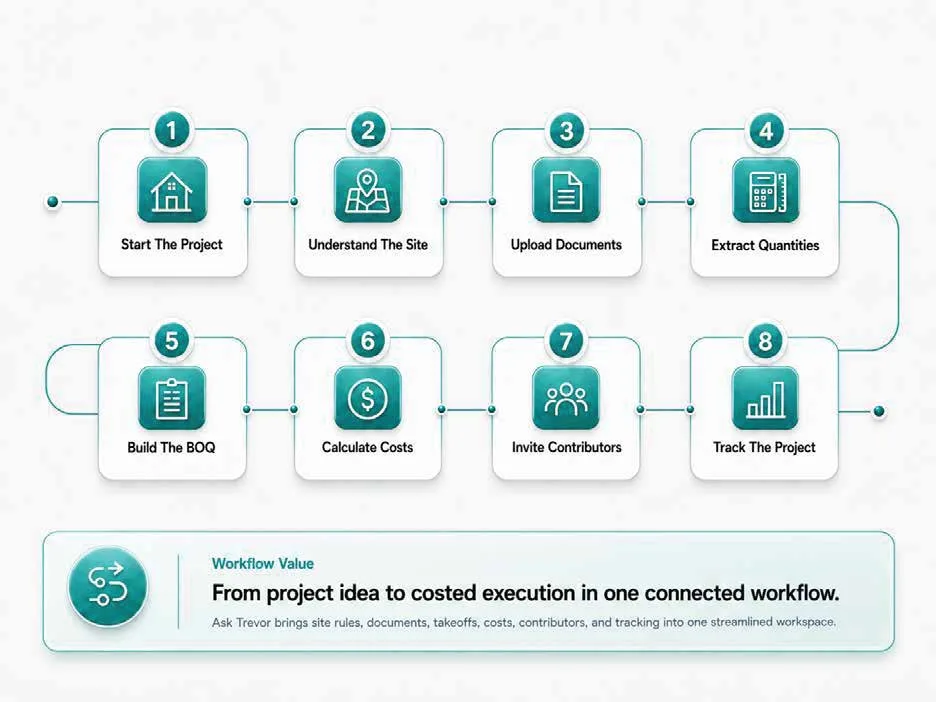
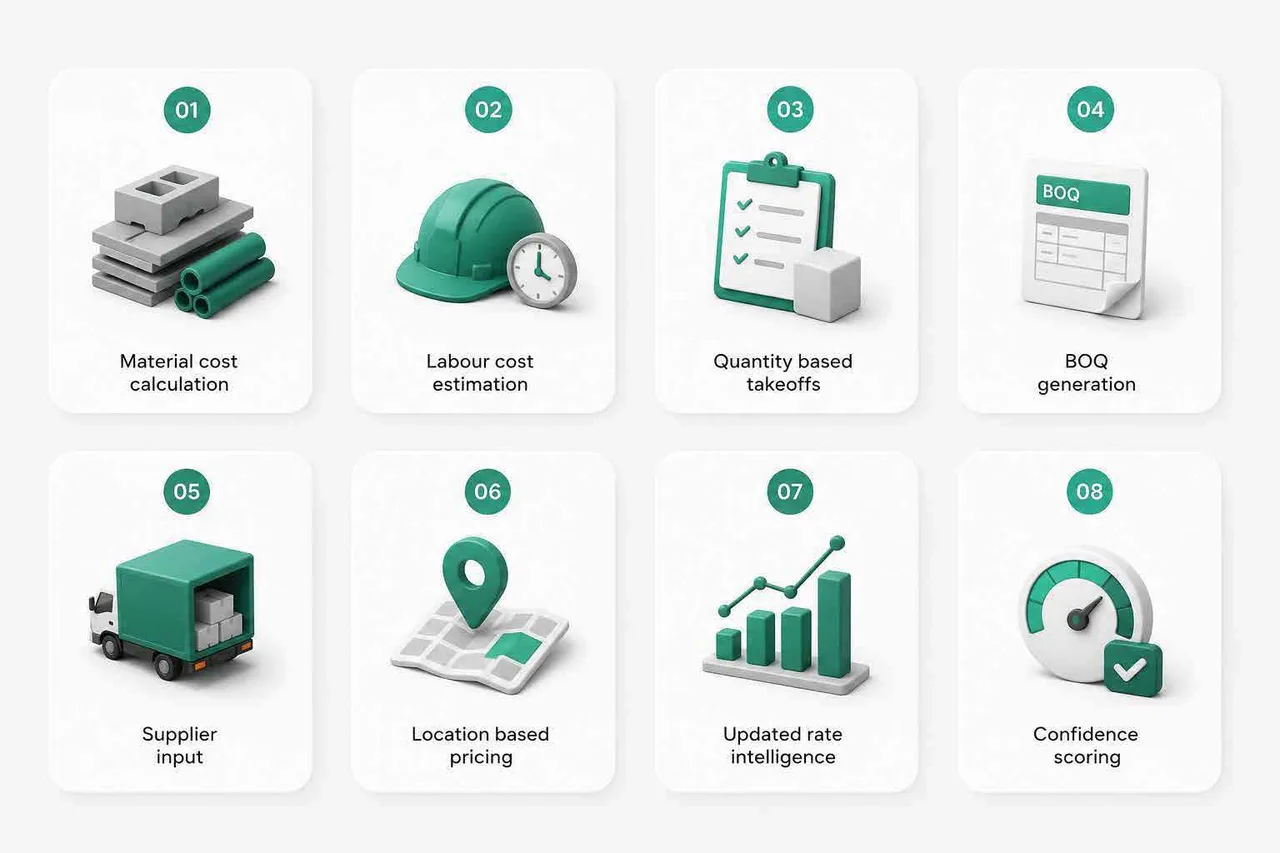
Carry an address and its documents through specialized agents.

Afaq built six specialized agents around the construction process. Planning reviews rules and zoning; Plans reads drawings and generates quantities; Costing prepares estimates; Contributor processes supplier and contractor input; Document Librarian manages files; and Brief assembles the project brief.

The stages pass structured information between them. A project can carry its address, uploaded drawings, quantities, Bill of Quantities and rate-based estimates into the same workspace used by owners, contractors, suppliers and consultants.

What the workflow includes

  • Bring property information and project documents into one workspace.
  • Extract quantities from drawings and assemble a Bill of Quantities.
  • Use rate information to prepare material and labour estimates.
  • Carry structured outputs into a project brief for review.

Project details

Project materials showing the workflows and interfaces described in this case.

A structured planning and estimating workflow.

The platform connected the early planning process to the information used for budgeting and coordination. The project illustrates how specialized agents can contribute to one workflow while keeping the underlying documents and intermediate outputs available to the people making the decision.

What this means for the technology owner.

Estimates depend on the documents, assumptions and rate information behind them. The operating responsibility is to keep those inputs traceable and current, define who reviews a material decision and manage changes to the document and model services. A useful handover explains those dependencies alongside the application code.

The technology ownership checklist →

AI agentsDocument AIBOQ engineLive rate pricingWeb app

Project contribution: Afaq Jamshad. The scope described above identifies the work behind this case.

Editorial review: Ego Eimi · Updated September 6, 2026 · About the team

Your technology

Start with the business

Your business depends on it.

Tell us which system matters, what has changed and who controls it. We will define a reviewable next step. Read Foundation and the commitments and evidence.