



Case studiesExperiential marketing

Collaborate: HubSpot, Scoro and Airtable integration

Collaborate’s deal information lived in HubSpot, Scoro and Airtable. Abhishek Gawade’s integration work connected the tools around the agency’s sales and billing workflow, with controls for duplicate processing and failed transfers.

Business
Collaborate
Sector
Experiential marketing
Scope
CRM and operations integration
Contributor
Abhishek Gawade
Editorial illustration: three metal channels meeting around an orange insert
AI-generated editorial illustration of the project’s domain.

Separate records turned a closed deal into another manual handoff.

When a deal closed, the team had to carry information between systems, create fields and check that the corresponding record existed in Scoro. Missing or inconsistent data could surface later in billing.

The agency needed its existing tools to work together. Replacing the CRM or operations platform would not address the specific failure as directly as owning the connections between them.
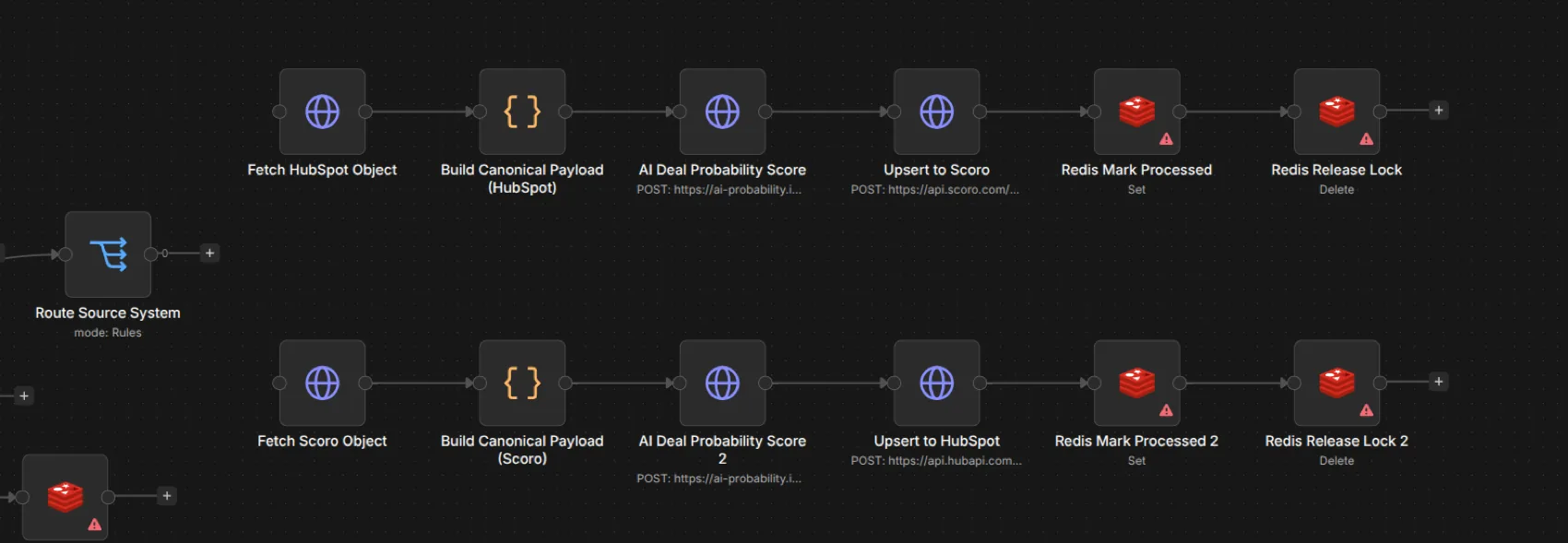
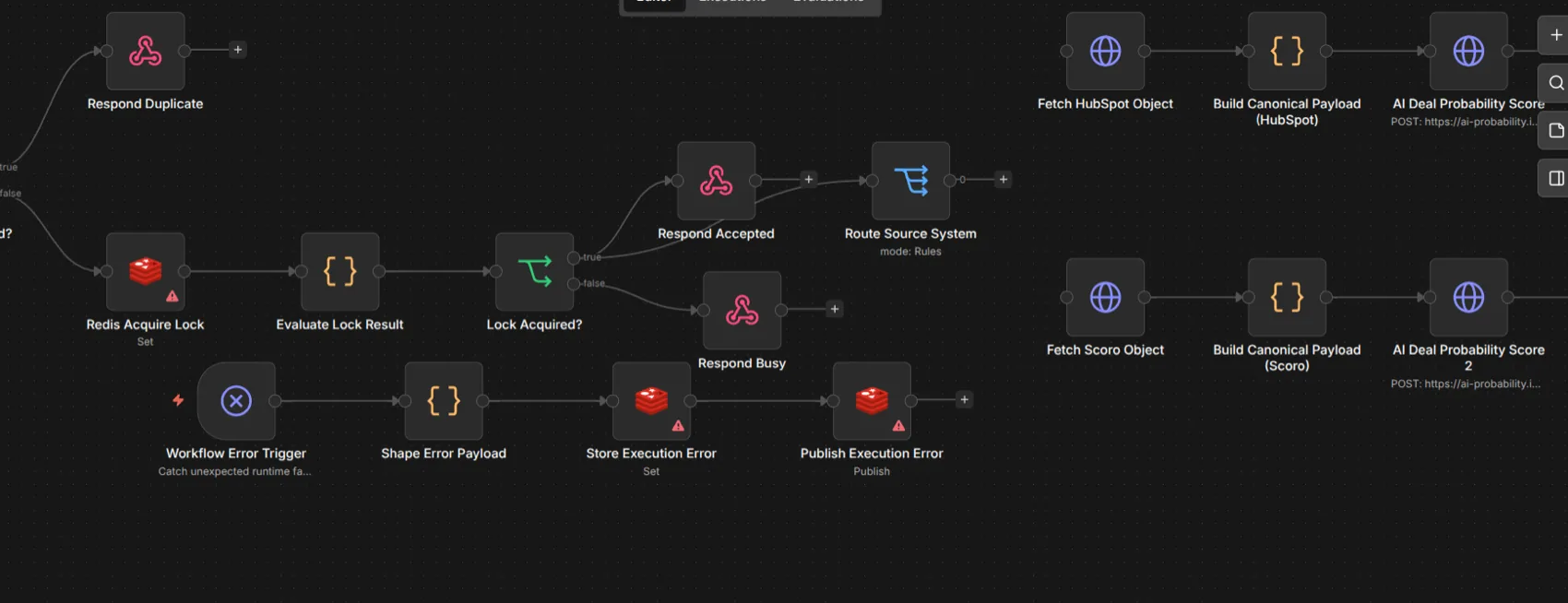
Give each update a consistent route through the connected tools.

The integration used n8n for bidirectional updates between HubSpot and Scoro, with Airtable in the workflow. Each event was translated into a canonical payload before the destination record was updated.

Idempotency keys and Redis locks controlled repeated processing. Error triggers, retries and execution logs supported recovery when a connected service failed. An AI deal-probability score was written back as another field in the workflow.

What the workflow includes

  • Normalize records into a common payload before writing them.
  • Use idempotency keys and Redis locks to control duplicate processing.
  • Return an AI deal-probability score to the business record.
  • Keep failed executions visible through logs and recovery steps.

Project details

Project materials showing the workflows and interfaces described in this case.

A defined transfer and recovery process around existing software.

The project replaced a collection of manual handoffs with an integration layer that connected the agency’s tools. The operating logic included the normal transfer, repeated events and service failures, giving the process a defined path beyond a successful API call.

What this means for the technology owner.

Bought software still needs an owner when the connections affect billing. Someone must maintain field mappings, account permissions, API changes and recovery procedures across the whole workflow. Foundation can identify that dependency; Tech Team can own the agreed integration scope afterward.

Tech Team: ongoing technology responsibility →

n8nHubSpotScoroAirtableRedisAI deal scoringWebhooks

Project contribution: Abhishek Gawade. The scope described above identifies the work behind this case.

collaborateglobal.com — project link

Editorial review: Ego Eimi · Updated September 6, 2026 · About the team

Your technology

Start with the business

Your business depends on it.

Tell us which system matters, what has changed and who controls it. We will define a reviewable next step. Read Foundation and the commitments and evidence.