



Case studiesAdvertising operations

VEYLAN: backend and asynchronous AI for advertising workflows

VEYLAN brought strategy, creative and media workflows into an agency workspace. Zain Raza led the backend build for Ego Eimi, connecting the business data model to long-running AI jobs and live progress updates.

Business
VEYLAN
Sector
Advertising operations
Scope
Multi-tenant backend and asynchronous AI
Contributor
Zain Raza
Editorial illustration: portfolio sleeves aligned around a central folder and orange sheet
AI-generated editorial illustration of the project’s domain.

Agency work crossed clients, campaigns and disconnected systems.

An agency works across organizations, clients, brands and campaigns. The same campaign can involve a strategy, proposal, creative brief and several conversations, so those relationships need to remain connected.

AI generation adds work that takes longer than an ordinary API request. The platform needed to keep the workspace responsive while showing people the state of a running task.
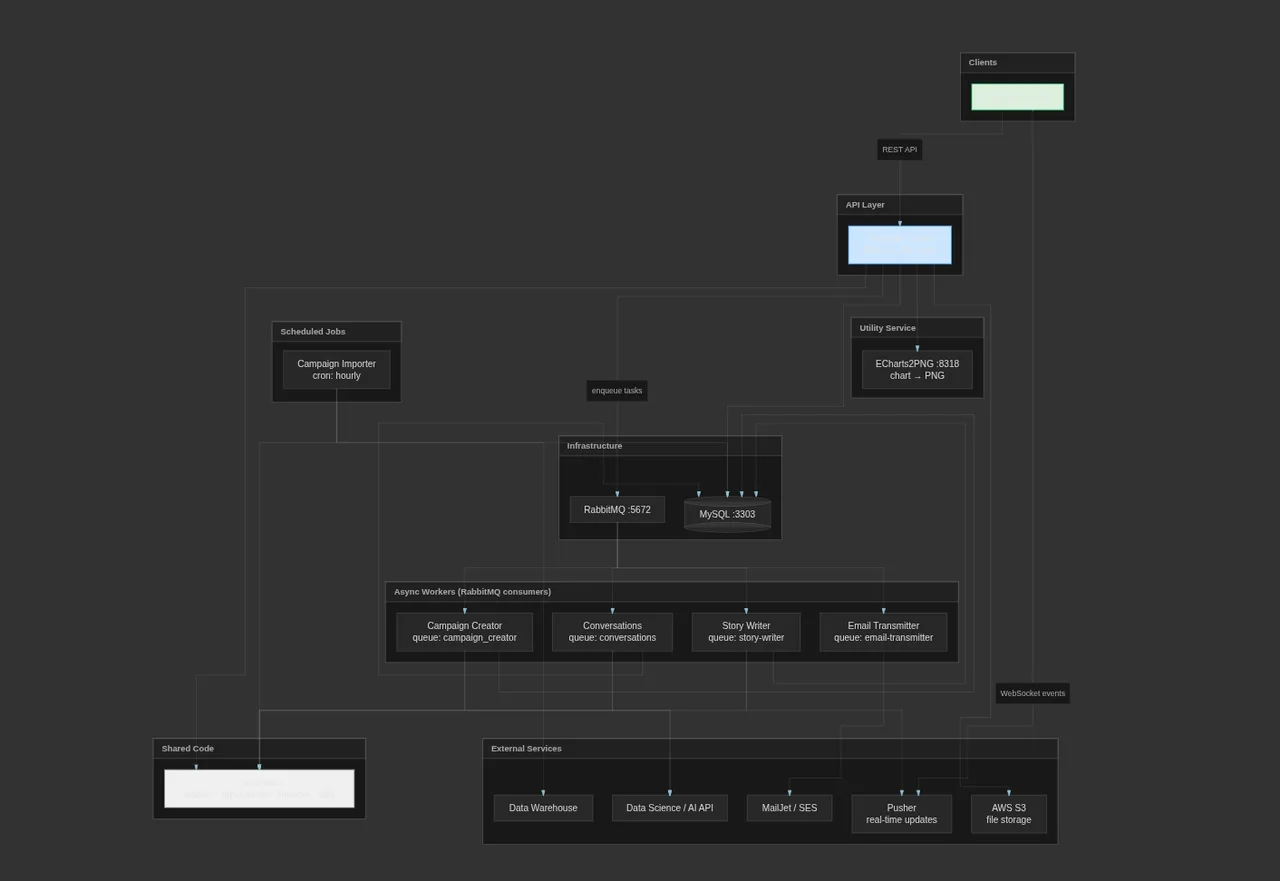
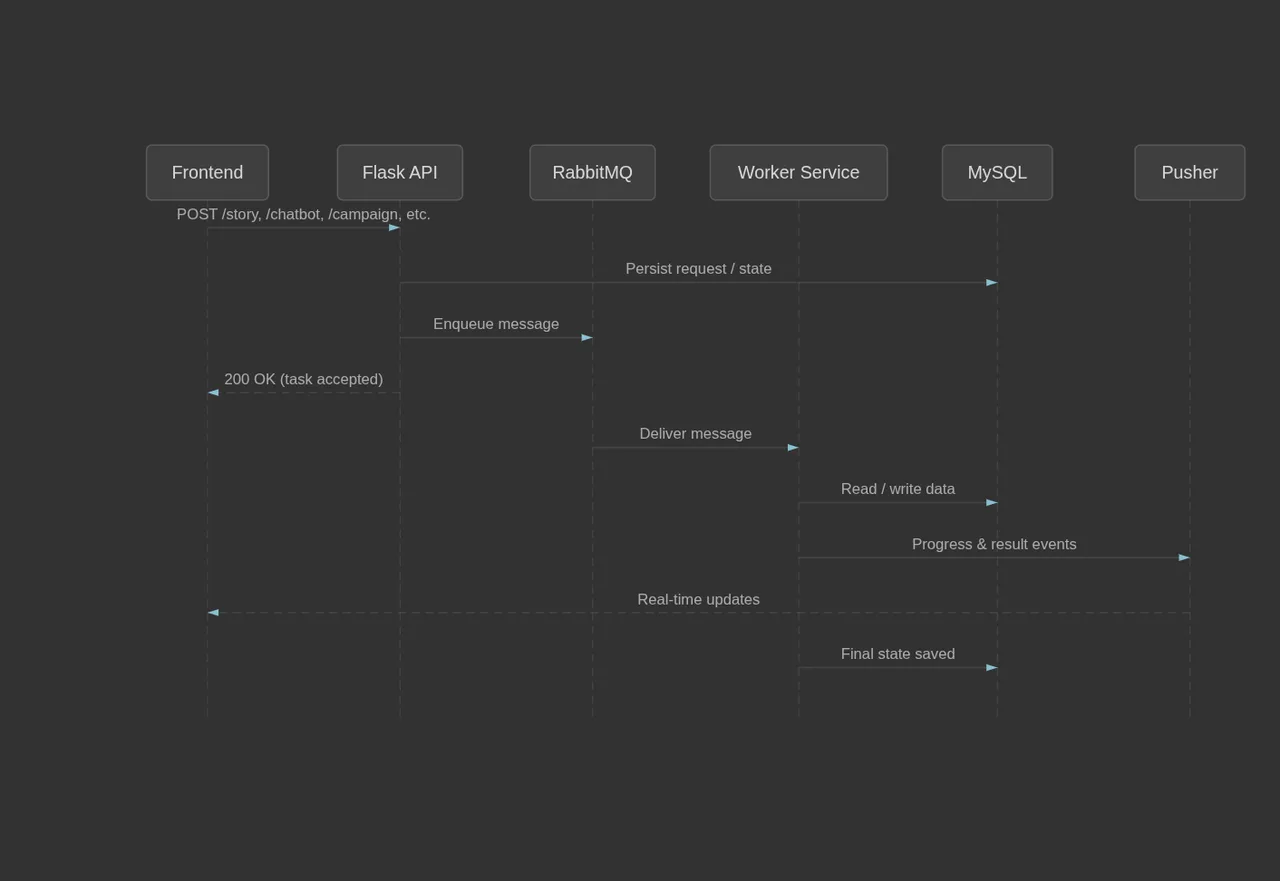
Model the business and run long tasks outside the request.

The multi-tenant Flask REST API modeled organizations, agencies, clients, brands, campaigns, strategies, proposals, creative briefs and conversations. PostgreSQL supported the shared data layer.

RabbitMQ workers handled tasks including story writing, conversations and campaign creation. Pusher streamed progress into the workspace, while integrations connected AI services, AWS S3, advertising data warehouses and demand-side platforms.

What the workflow includes

  • Model agency and client relationships in a multi-tenant API.
  • Run longer AI tasks through asynchronous workers.
  • Stream execution progress into the workspace.
  • Connect media, storage and advertising-data services.

Project details

Project materials showing the workflows and interfaces described in this case.

Product walkthrough

Multi-tenant backend and asynchronous AI. The delivery section explains the workflow demonstrated here.

Campaign context and AI execution shared an application foundation.

The backend connected the agency’s business objects to the execution of AI work. People could follow a campaign and its running tasks in the same workspace, with the supporting integrations handled behind the API.

What this means for the technology owner.

A multi-tenant system needs clear client boundaries, job ownership and recovery rules. A takeover should map the queue, storage, progress channel and external providers together. That makes it possible to change the generation pipeline without losing the campaign context around it.

The technology ownership checklist →

PythonFlaskRabbitMQPusherAWS S3PostgreSQL

Project contribution: Zain Raza. The scope described above identifies the work behind this case.

VEYLAN — project link

Editorial review: Ego Eimi · Updated September 6, 2026 · About the team

Your technology

Start with the business

Your business depends on it.

Tell us which system matters, what has changed and who controls it. We will define a reviewable next step. Read Foundation and the commitments and evidence.