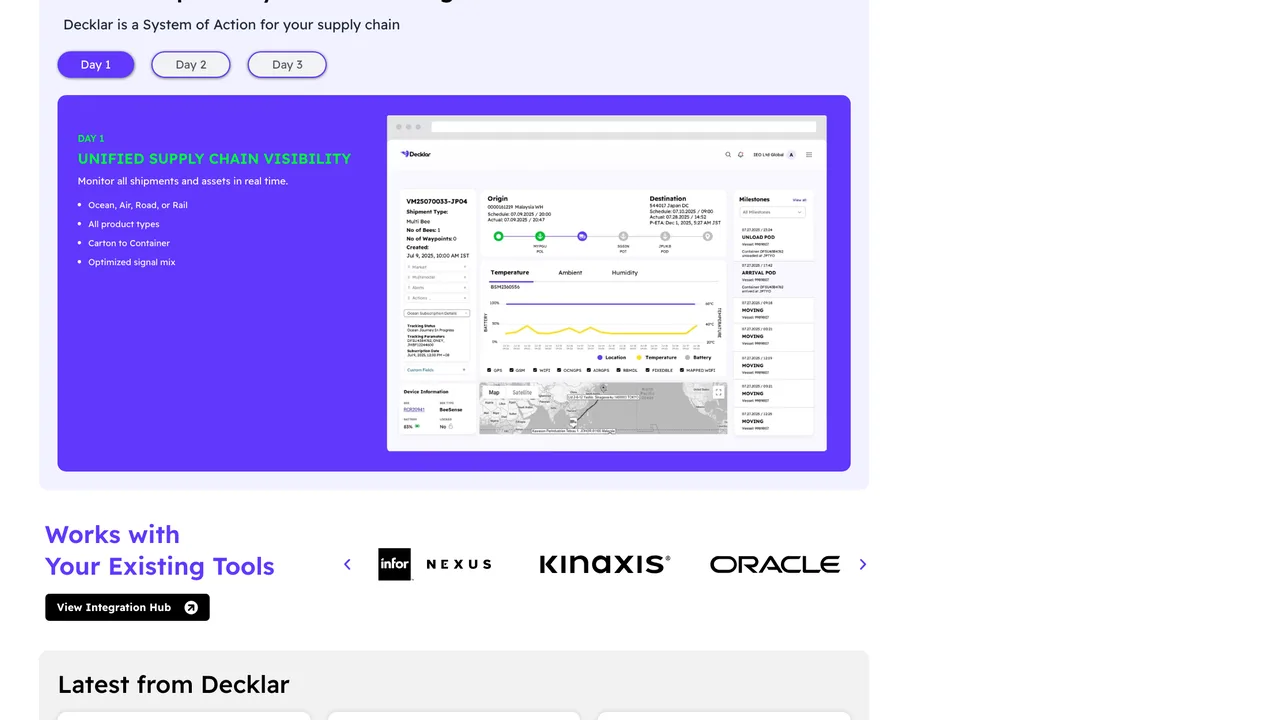

Shipment information was distributed across business systems.
Planning tools, carriers and warehouses each hold part of a shipment’s story. When those records are separate, a planner has to reconcile them before understanding a delay or a condition change.
The product needed to bring shipment and reusable-asset information into a common model. Its view had to account for changing events across transport modes and make the relevant information usable by operations teams.