


Case Study Healthcare · Practice + EHR + RCM

Registration to reimbursement, in one system.

A healthcare organization ran its front office, its clinic floor and its billing in separate tools. We designed and built one platform that carries a patient from the front desk through care and on to the payer. Three modules, one record, built to the standards healthcare runs on.

Client
Integrated Healthcare Operations Platform
Sector
Healthcare · Platform
Engagement
Platform design & build
Stage
Delivered
Platform
Web app
Healthcare Operations Platform — the clinical template builder in the platform, with a drag-and-drop form canvas and configurable components, shown with test data
The drag-and-drop clinical template builder, where staff assemble intake forms and evaluations without code. Screenshot uses test data.
By the numbers
3Modules, one system (Practice, EHR, RCM)
2FAE-prescribing
ICD + CPTCoding
HIPAA · SOC 2Built to standard

Registration, care and billing lived in different tools.

A healthcare organization runs registration, scheduling, clinical notes, prescribing and billing. When each one sits in its own tool, the seams between them cost staff time every day.

A patient registered in one system, then a provider re-keyed the same details in another to document the visit. Coding done at the bedside did not flow to the people who file claims. Each handoff invited a typo, and every typo surfaced later as a denied claim or a coverage gap.

The seams also hid the picture. A practice with several locations could not see who was booked where, which encounters were unbilled, or where revenue stalled, because the answers lived in separate places that did not agree.
One platform, three modules, sharing a single record.

We designed and built the platform end to end. Practice Management models multiple practices and locations against shared master data, so providers, schedules and billing read from one source. The EHR runs scheduling, a drag-and-drop clinical template builder, structured evaluations coded with ICD and CPT, and electronic prescribing. Revenue Cycle Management turns finished encounters into claims, routes them to the right payer, posts payments and works denials.

What that meant in practice

  • Practice Management that models multiple practices and locations on shared master data
  • An EHR with scheduling, a drag-and-drop template builder, and ICD and CPT coded evaluations
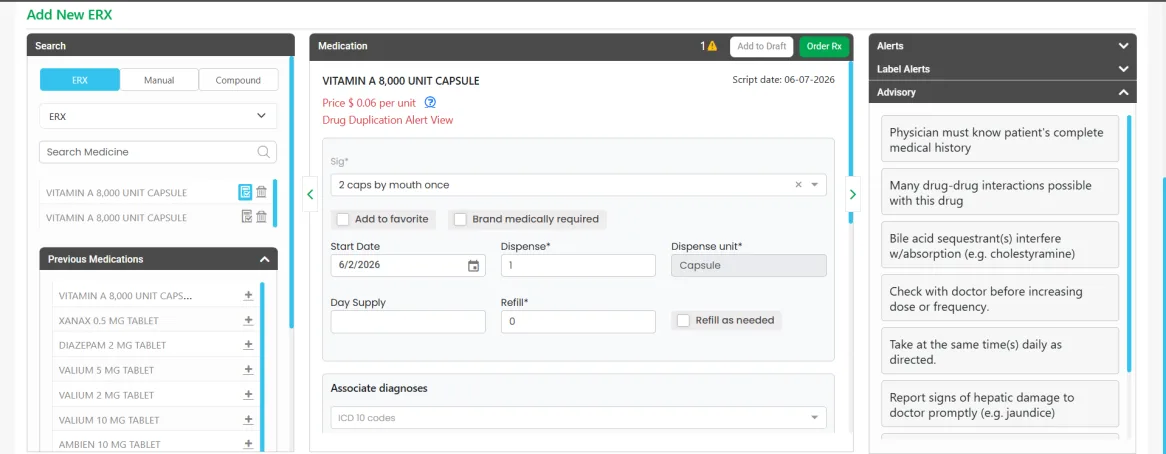
  • Electronic prescribing secured by two-factor authentication, with drug-interaction alerts at the point of order
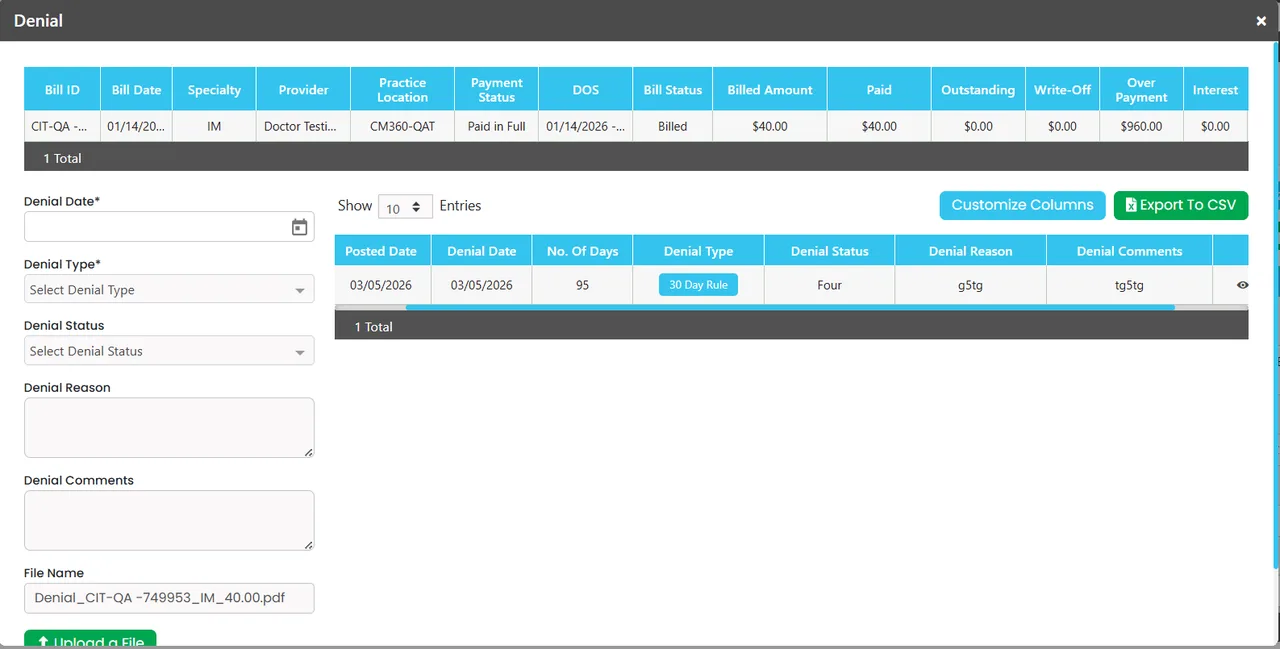
  • Revenue Cycle Management that generates claims to insurers, attorneys, employers or self-pay, posts payments and works denials and eligibility

We built it to the standards healthcare runs on: HIPAA, SOC 2, role-based access and audit logging on the work that touches a patient record.

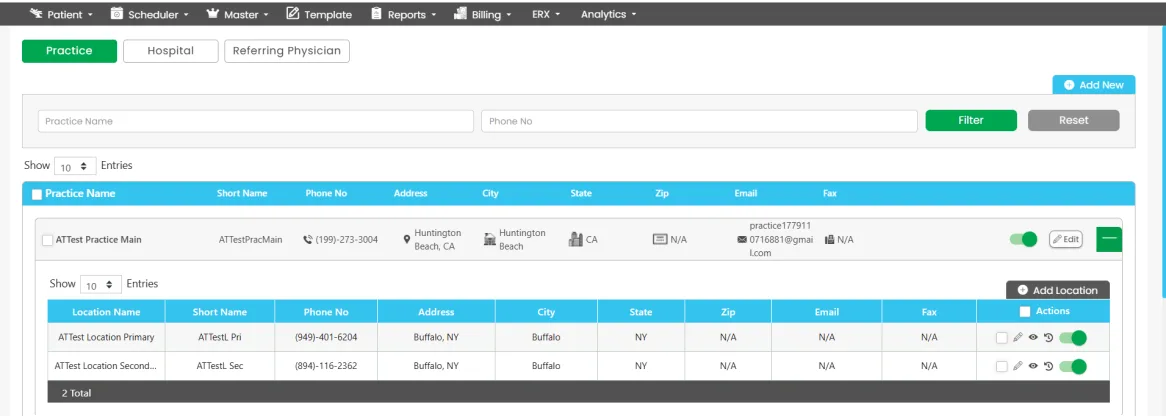
Healthcare Operations Platform — the practice management view, configuring multiple practices and locations with providers, departments and location-specific settings, shown with test data
Practice Management

Model the org once, and everything reads from it.

An organization sets up its practices, locations, departments and provider assignments in one place. Scheduling, clinical work and billing all run against that structure, so a location change or a new provider shows up everywhere at once. Administrators run it from one console.

Multi-practice · multi-location · shared master data
Inside the platform
The hardest part

Electronic prescribing carries the most weight on this build: every order has to clear a drug-interaction check and a two-factor gate after the provider has been identity-proofed, and the resulting record has to stand up to an audit, so we wired safety, identity and logging into a single approval step rather than bolting them on around it.

Ego Eimi Engineering note · the build

Delivered, and running the full path from front desk to payer.

The platform is delivered and in production, carrying an organization from patient registration through clinical care to billing and reimbursement in one system.

A patient registered at the front desk flows straight into scheduling. The provider documents the encounter, codes it with ICD and CPT, and prescribes through the two-factor gate. Revenue Cycle Management picks up the finished encounter, files the claim with the right payer, posts the payment and works any denial. One record, three modules, no re-keying between them.

Web app HIPAA RBAC HL7/FHIR e-Prescribing Audit logging
Our role
Platform design & build
Team
Lead + specialists
Model
Delivered platform
Status
In production
Project partner Muhammad

Considering something similar? Explore a fixed-price build, an embedded engineering team, or the guide to building software without a tech team.

Next / Your build

Taking on new builds

Have something in mind?

Tell us what you're making. We reply within a day with a fixed price and a date.